
GFCI Outlet Won't Reset? Safe Checks Before You Call
Troubleshoot a GFCI receptacle that will not reset using safe external checks, and recognize moisture, wiring, and device failures for an electrician.
Affiliate disclosure: We may earn a commission on purchases made through links in this article, at no extra cost to you. Learn more.
A GFCI receptacle is designed to interrupt power when it detects current leaving its intended path. If its RESET button will not latch, the device may have no incoming power, a connected appliance may still have a fault, moisture may be present, a protected downstream circuit may be involved, or the GFCI itself may have failed.
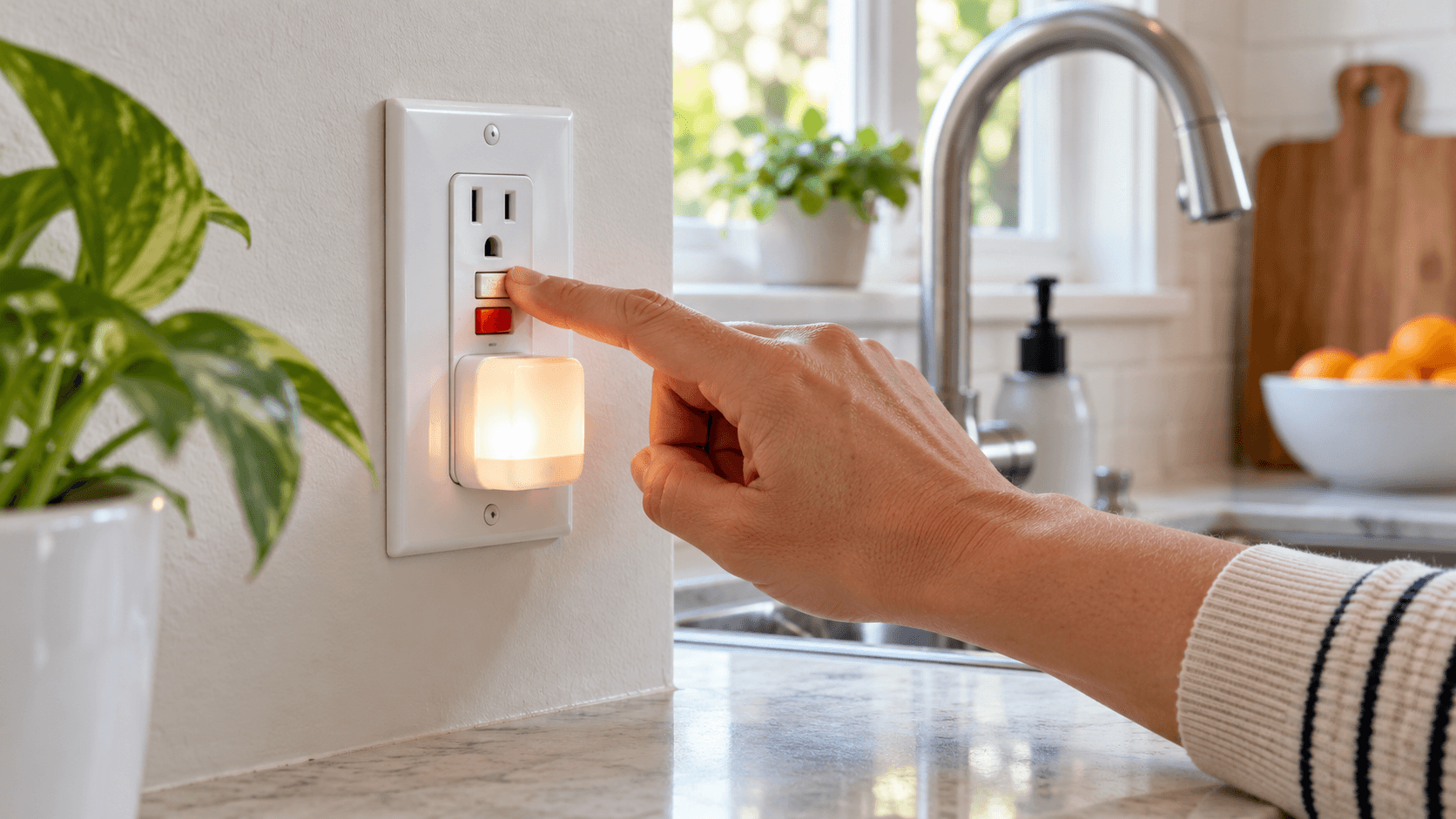
The safe homeowner checks happen outside the electrical box. You can unplug loads, keep the location dry, inspect for visible warning signs, check the breaker panel once, and operate the device's TEST and RESET buttons. Removing the cover or testing energized conductors is electrician work.
Treat warning signs as a stop signal
Do not touch or reset the receptacle when you notice:
- burning or hot-plastic odor;
- smoke, sparks, buzzing, or crackling;
- discoloration, melting, a cracked face, or a loose receptacle;
- warmth at the outlet or wall plate;
- standing water, active leaks, or a wet device;
- a shock or tingling sensation from an appliance, fixture, or surface;
- repeated trips immediately after reset;
- evidence of pests, impact, construction damage, or overheated cords.
Keep people away, disconnect power only if the panel can be approached safely, and contact a qualified electrician. For smoke or fire, leave the area and call emergency services. Never use water on energized electrical equipment.
What a GFCI does
A ground-fault circuit interrupter compares current traveling on the intended conductors. When it detects a small imbalance consistent with leakage, it disconnects power quickly to reduce shock risk. GFCI protection does not make electricity near water harmless, and it does not replace grounding, correct wiring, overcurrent protection, or safe appliance use.
GFCI protection can be provided by:
- a receptacle with TEST and RESET buttons;
- a breaker in the electrical panel;
- a combination protective device;
- a portable GFCI used for temporary applications.
One receptacle can also protect other receptacles connected downstream. The dead outlet you find may be controlled from a different room or location.
First, remove connected equipment
With dry hands and a dry floor, unplug every appliance and extension cord from the affected receptacle and any known downstream outlets. Pay particular attention to equipment exposed to moisture, damaged cords, outdoor tools, heaters, refrigerators, pumps, and countertop appliances.
Do not continue using a device that is wet, damaged, unusually warm, or suspected of causing the trip. Set it aside for appropriate inspection.
After all loads are removed, press RESET firmly once. Some devices require a deliberate press until a click is felt. Do not use a tool, tape the button, or strike the device.
If it resets with everything unplugged, test the GFCI before reconnecting loads. Reintroduce appliances one at a time. If one device causes another trip, unplug it and have it serviced or replaced; do not defeat the GFCI to keep using it.
Check whether the circuit has supply power
A GFCI generally cannot reset correctly without incoming power. Look at the electrical panel without removing its cover. A tripped breaker may sit between ON and OFF rather than fully at OFF.
If there is no heat, odor, damage, water, or known electrical fault:
- turn off or unplug equipment on the affected circuit;
- move the identified breaker fully to OFF;
- move it once to ON;
- return to the dry GFCI and try RESET.
If the breaker trips again, will not move normally, or the circuit identity is uncertain, stop and call an electrician. Do not repeatedly reset a breaker or substitute one with a different rating.
Fuses require a different process. Never install a higher-rated fuse or place conductive material in a fuse holder.
Look for another tripped protective device
Walk through likely protected areas: bathrooms, kitchens, garage, basement, laundry, crawlspace access, exterior walls, porches, and utility spaces. Look for another GFCI receptacle or a GFCI/AFCI breaker that has tripped.
Reset only devices that are dry and free of warning signs. Avoid opening outdoor covers during rain or touching equipment while standing on wet ground.
If restoring one GFCI returns power elsewhere, update the circuit directory or add accurate permitted labels so the relationship is easier to find next time.
Test the GFCI after it resets
ESFI's recommended functional check uses a small light:
- press RESET;
- plug in a nightlight or similar low-power light and confirm it turns on;
- press TEST and confirm the light turns off;
- press RESET and confirm the light turns on again.
If TEST does not remove power, RESET does not restore it, the buttons behave abnormally, or an indicator shows a fault according to the device manual, the protection cannot be trusted. Stop using the receptacle and arrange replacement by a qualified electrician.
Do not rely only on an indicator lamp or a plug-in three-light tester to prove that every GFCI function and wiring condition is correct. The device's built-in test and professional testing serve different purposes.
Why reset attempts fail
No incoming power
The upstream breaker, fuse, switch, connection, or another protective device may be open. A wiring fault can also interrupt supply. Finding voltage requires appropriate instruments, training, and safe access; it is not a reason to remove the GFCI from the box yourself.
A ground fault still exists
A wet or defective appliance, outdoor connection, damaged cable, or downstream circuit can keep the protective device open. Disconnecting portable loads may narrow the cause, but faults in fixed wiring need an electrician.
Moisture is present
Leaks, condensation, weather exposure, and flooding can affect the device or downstream equipment. Do not reset a wet circuit simply because the surface has been wiped. Correct the water source and have affected electrical equipment evaluated.
The GFCI reached end of life or failed
Protective devices do not last forever. Some modern GFCIs perform internal self-tests and refuse to reset when protection is no longer available. Replacement must match the circuit, location, box, wiring method, and current code requirements.
Line and load wiring are incorrect
GFCI receptacles distinguish incoming LINE conductors from protected LOAD conductors. Incorrect installation can prevent reset or leave outlets improperly protected. The cover should stay in place; a qualified electrician can identify and correct the wiring.
Do not solve it by replacing the outlet blindly
A new receptacle will not repair a wet appliance, damaged cable, loose upstream connection, overloaded box, incorrect breaker, or other circuit fault. Replacement also requires de-energizing, proving absence of voltage, identifying line and load conductors, evaluating grounding and box condition, and complying with applicable electrical rules.
Have an electrician perform the replacement when the device fails its test, will not reset after safe external checks, is loose or damaged, or lacks required protection for its location.
Prevent repeat problems
- Test GFCI devices monthly according to ESFI and the manufacturer.
- Keep receptacles, plugs, and hands dry.
- Maintain weather-resistant covers and appropriate outdoor equipment.
- Replace damaged cords and stop using appliances that trip protection.
- Label panel circuits and downstream protected receptacles accurately.
- Correct plumbing leaks and condensation before restoring affected electrical equipment.
- Do not use extension cords as permanent wiring.
Final recommendation
Unplug every load, check for moisture or damage, reset the identified breaker once if conditions are safe, locate any upstream GFCI, and perform the device's built-in test after power returns.
If the GFCI will not reset, fails TEST, trips again, or shows any sign of heat, damage, water exposure, or wiring trouble, leave it off and call a qualified electrician. The refusal to reset is a safety symptom, not a button problem to defeat.
Sources and methodology
This guide uses current public electrical-safety guidance. It intentionally limits homeowner steps to external controls and visual checks; it does not provide energized testing or receptacle-replacement instructions.
Frequently Asked Questions
Why will a GFCI outlet not reset?
Can I force the RESET button to stay in?
Can one GFCI control other outlets?
How often should I test a GFCI?
About the author
Jane DIY
— Senior Reviews EditorJane DIY is the Senior Reviews Editor for DIY Tool Guide. Her byline identifies articles she reviews for clarity, sourcing, and practical usefulness.
More from Plumbing & Electrical
Why Your Circuit Breaker Keeps Tripping
Understand repeated breaker trips, perform safe load checks without opening the panel, and recognize overload, fault, moisture, and wiring warnings.
How to Fix a Running Toilet: Diagnose Before Buying Parts
Find why a toilet keeps running, test the flapper and fill valve, make safe adjustments, and know when the repair needs a plumber.

How to Unclog a Slow Bathroom Sink Safely
Clear a slow bathroom sink by checking the stopper and P-trap first, using mechanical methods safely, and recognizing a larger drain problem.

How to Fix a Leaky Faucet: Diagnose Before Buying Parts
Find where a faucet is leaking, identify the correct valve system and replacement part, repair it safely, and know when the problem needs a plumber.