
5 Best Cordless Drills for Homeowners in 2026
Compare five cordless drills for homeowner projects, with verified specifications, clear trade-offs, and guidance on batteries, hammer mode, and kits.
Affiliate disclosure: We may earn a commission on purchases made through links in this article, at no extra cost to you. Learn more.
A cordless drill is the first power tool most homeowners should buy. It drills pilot holes, installs shelves and hardware, assembles furniture, and drives ordinary screws with more control than an impact driver. The right choice is not automatically the model with the largest output number: it is the drill that fits your projects, your preferred weight and control, and the battery platform you are prepared to keep using.
This guide compares five current options for distinct homeowner needs. The recommendations are based on manufacturer-published specifications, tool configuration, safety and control features, battery-platform considerations, and suitability for common DIY work. They are not based on claimed hands-on testing by this site.
Quick picks
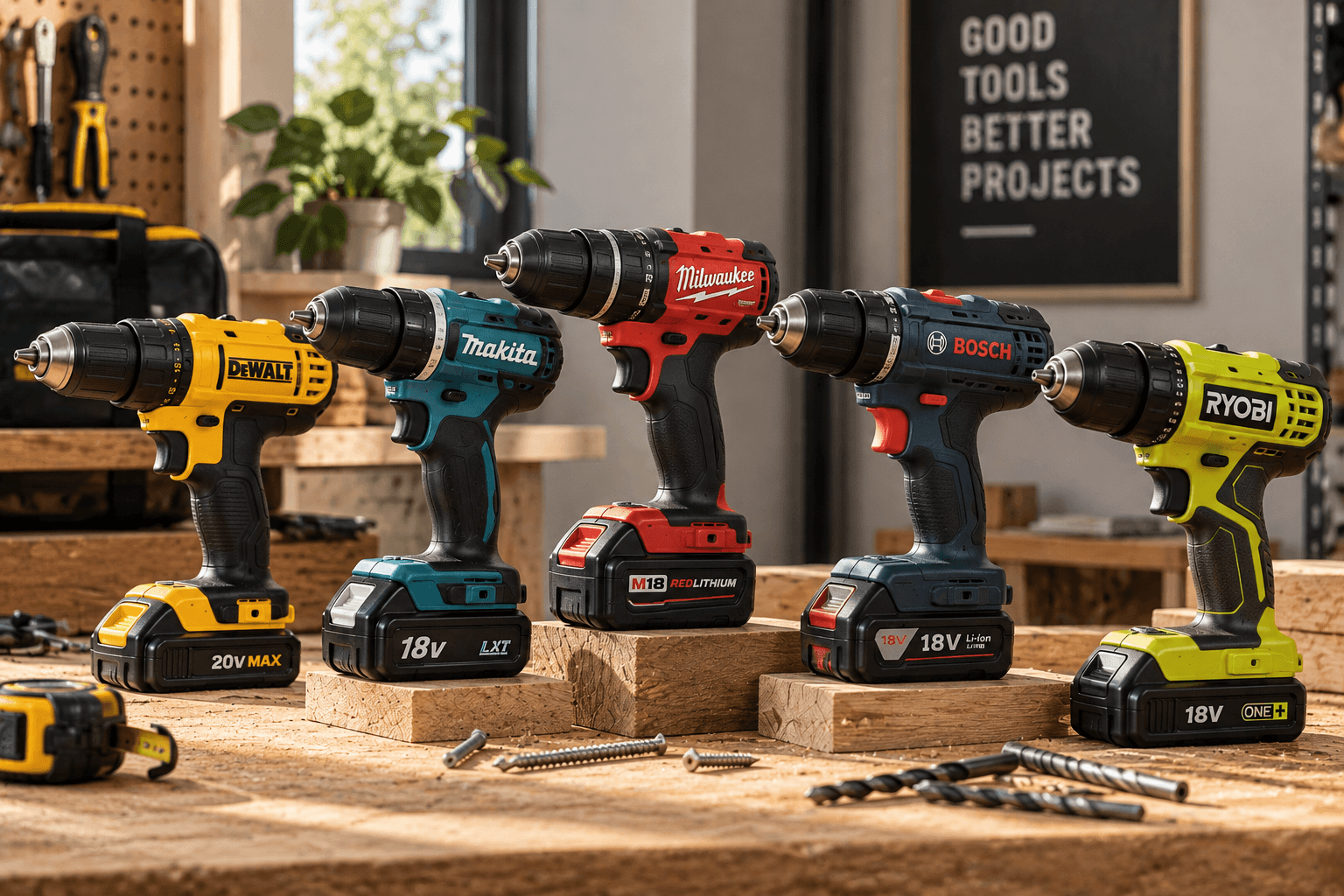
| Drill | Best for | Platform | Motor | Chuck | Hammer mode | Key trade-off | |---|---|---|---|---|---|---| | Milwaukee M18 Fuel 2904-20 | Demanding work and occasional masonry | M18 18V | Brushless | 1/2" all-metal ratcheting | Yes | Hammer mode and high output are unnecessary for light work | | DeWalt DCD777B | Compact general-purpose use | 20V Max (18V nominal) | Brushless | 1/2" single-sleeve ratcheting | No | Output is stated in UWO, so torque comparisons are not direct | | Makita XFD131 | A complete first kit | 18V LXT | Brushless | 1/2" | No | Lower published torque than the heavy-duty picks | | Bosch GSR18V-535CN | Control and bind-up protection | Bosch 18V / AMPShare | Brushless | 1/2" all-metal keyless | No | Sold as a bare tool; connectivity requires an optional module | | Ryobi PBLDD02B | Building a broad homeowner tool collection | 18V ONE+ | Brushless | 1/2" ratcheting metal | No | Larger performance-oriented drill than Ryobi's compact option |
Best performance pick: Milwaukee M18 Fuel 2904-20
Best for: homeowners taking on frequent renovation work, large wood-boring bits, and occasional holes in masonry.
Confirmed specifications
- M18 18V battery platform and Powerstate brushless motor.
- 1,400 in-lbs of published torque.
- Two speed ranges: 0–500 and 0–2,100 RPM.
- 1/2" all-metal ratcheting chuck.
- Hammer-drill mode and AutoStop bind-up control.
- 3.3 lb tool-only; the 2904-20 includes the drill, side handle, and belt clip but no battery or charger.
The 2904 is the most specialized option in this roundup. Its hammer mode adds a percussion action for brick, block, and concrete, while the side handle and AutoStop system address the extra reaction force that can occur when a large bit binds. That combination is useful for remodelers and ambitious DIYers, but it should not be mistaken for a requirement for basic home maintenance.
Choose the bare 2904-20 only if you already own M18 batteries. Milwaukee's 2904-22 kit is the relevant starter configuration and officially includes two XC5.0 batteries, a charger, side handle, and case. Always confirm the exact suffix before comparing offers.
Pros
- Highest published torque in this group
- Hammer mode for masonry
- AutoStop bind-up control
- All-metal 1/2-inch chuck
Cons
- More drill than light-duty users need
- Bare 2904-20 has no battery or charger
- Hammer function does not replace a rotary hammer for substantial concrete work
Do not buy it if: your projects are mostly furniture assembly, wall anchors, small pilot holes, and occasional repairs. A standard drill/driver is a more proportionate choice.
Best compact general-purpose pick: DeWalt DCD777B
Best for: routine homeowner drilling and screwdriving in a compact brushless tool, especially for someone already using DeWalt 20V Max batteries.
Confirmed specifications
- 20V Max battery platform; DeWalt states that nominal voltage is 18V.
- Brushless motor and two-speed transmission.
- 340 UWO published output — not 340 in-lbs of torque.
- 1/2" single-sleeve ratcheting chuck.
- Standard drill/driver with no hammer function.
- DCD777B is tool-only; battery and charger are sold separately.
The DCD777 is a straightforward choice for pilot holes, cabinet hardware, shelving, and everyday fasteners. Its lack of hammer mode is not a drawback for those jobs. It keeps the controls focused on drilling and clutch-controlled screwdriving, and the active DeWalt product page confirms that it remains part of the 20V Max range.
This pick should be compared by configuration rather than an assumed price. The DCD777B is bare; starter kits use different suffixes and may include different batteries. DeWalt's output rating also prevents a responsible numeric torque comparison with Milwaukee, Makita, Bosch, or Ryobi.
Pros
- Brushless motor
- Compact general-purpose format
- Two-speed transmission
- Access to the DeWalt 20V Max platform
Cons
- No hammer mode
- DCD777B requires an existing battery and charger
- UWO cannot be directly compared with published inch-pound ratings
Do not buy it if: masonry drilling is a regular task or you specifically need a verified kit in the box. Compare a hammer-drill model or a clearly identified DCD777 kit SKU instead.
Best ready-to-work kit: Makita XFD131
Best for: a first-time buyer who wants a confirmed drill, battery, charger, and bag in one manufacturer-defined package.
Confirmed specifications
- 18V LXT battery platform and brushless motor.
- 440 in-lbs of published maximum torque.
- Two speed ranges: 0–500 and 0–1,900 RPM.
- 1/2" chuck and no hammer function.
- 3.8 lb with the included 3.0Ah battery, according to Makita's specification table.
- The XFD131 kit includes one BL1830B 3.0Ah battery, DC18SD charger, XFD13Z drill/driver, and tool bag.
The XFD131 earns its place through package clarity and balance rather than the largest torque number. It is a conventional drill/driver for wood, metal, and fastening work, and its two-speed gearbox lets the buyer select lower speed for controlled driving or higher speed for drilling. For a homeowner starting without any compatible batteries, the defined kit avoids the hidden cost of adding a charger separately.
The trade-off is straightforward: this is not Makita's answer to the high-output Milwaukee, and it has no masonry mode. Buyers already committed to another battery system gain little by opening a new platform for a midrange drill.
Pros
- Complete kit configuration is clearly specified
- Brushless motor
- Two-speed gearbox
- Moderate weight with the included battery
Cons
- No hammer mode
- One battery in the specified XFD131 kit
- Not the high-output choice in this group
Do not buy it if: you already have usable batteries on another platform or your main requirement is repeated masonry drilling.
Best control-focused pick: Bosch GSR18V-535CN
Best for: buyers who value bind-up protection, a precise clutch, and a light bare tool more than a bundled starter kit.
Confirmed specifications
- Bosch 18V / AMPShare platform and EC brushless motor.
- 535 in-lbs of published torque.
- Two speed ranges: 0–600 and 0–1,900 RPM.
- 1/2" all-metal keyless chuck and 20+1 clutch settings.
- KickBack Control; optional connected features require a separate connectivity module.
- 2.5 lb tool-only; the GSR18V-535CN includes a belt clip but no battery or charger.
- Standard drill/driver with no hammer function; the similar GSB model is the hammer drill.
The Bosch stands out for control features that are relevant even when maximum output is not. KickBack Control is designed to limit tool rotation during a detected bind-up, while the 20+1 clutch offers incremental control for fasteners. Its published tool-only weight is also clearly distinguished from a working weight, which will depend on the battery selected.
The main purchasing risk is SKU confusion. GSR identifies this standard drill/driver, while GSB identifies the related hammer drill. The N suffix is the bare-tool package, so a first-time Bosch buyer must budget for a compatible battery and charger.
Pros
- KickBack Control
- 20+1 precision clutch
- All-metal chuck
- Clearly specified 2.5-pound tool-only weight
Cons
- Battery and charger not included
- No hammer mode
- Optional connectivity adds complexity many homeowners will not use
Do not buy it if: you want a one-box starter kit or do not value the added control and connectivity options enough to join the Bosch battery platform.
Best homeowner-platform pick: Ryobi PBLDD02B
Best for: homeowners who expect to add lawn, cleaning, hobby, or other DIY tools on the same 18V ONE+ batteries.
Confirmed specifications
- 18V ONE+ platform and HP brushless motor.
- Up to 850 in-lbs of published torque.
- Two speed ranges: 0–700 and 0–2,150 RPM.
- 1/2" ratcheting metal chuck and 24-position clutch.
- Standard drill/driver with no hammer function.
- The PBLDD02B page offers tool-only and battery/charger configurations; contents depend on the selected SKU.
The PBLDD02B is the current Ryobi performance drill/driver and replaces the PBLDD01 generation used in the previous version of this article. Ryobi's official site marks the older PBLDD01K kit discontinued, so it should not anchor a 2026 recommendation. The newer model keeps the broad ONE+ battery-platform advantage while increasing the published output and speed range.
This is a performance-oriented full-size drill, not Ryobi's smallest option. Buyers who prioritize a short body and lighter everyday handling should compare the compact PSBDD02B; buyers who need masonry mode should choose a hammer-drill SKU instead of assuming the PBLDD02B includes it.
Pros
- Current-generation model
- High published output
- 24-position clutch
- Broad 18V ONE+ platform
Cons
- No hammer mode
- Not Ryobi's compact drill option
- Package contents vary by selected configuration
Do not buy it if: minimum size matters more than output, or if you already own enough batteries on a competing platform to make switching uneconomical.
How we chose these drills
This is an editorial comparison, not a hands-on test report. We reviewed current manufacturer product pages and manuals for model status, voltage platform, motor type, chuck, speed ranges, published output, hammer function, weight basis, safety features, and package contents. We then matched those characteristics to common homeowner buying situations: routine repairs, first-kit convenience, heavier renovation work, control during bind-ups, and long-term battery-platform expansion.
We did not assign star ratings because there is no site-owned test dataset to support a numerical score. We also excluded exact street prices, runtime estimates, durability promises, and cross-brand performance conclusions that cannot be established from comparable evidence. Before affiliate links are activated, each destination still needs a final check for the exact model suffix, included battery configuration, availability, and current retailer terms.
How to choose a cordless drill for home use
Start with the jobs, not the maximum number
For furniture, wall anchors, cabinet hardware, pilot holes, and general repairs, a two-speed drill/driver with an adjustable clutch is the useful baseline. Large hole saws, self-feed bits, repeated structural work, and masonry raise the case for more output, a side handle, bind-up protection, or hammer mode. Our broader cordless-drill buying guide walks through those decisions without tying them to a particular model.
Treat the battery as part of the purchase
A bare tool can be economical when compatible batteries and a charger are already on your shelf. For a first cordless tool, compare the complete kit contents rather than the drill body alone. Battery capacity also affects working weight and runtime, so a tool-only weight should never be presented as the weight you will hold in use.
Prefer a 1/2-inch chuck for an all-purpose drill
Every pick here uses a 1/2" chuck. That size accepts a broader range of common round- and hex-shank bits than a smaller chuck. Chuck construction and retention matter, but manufacturer wording should be followed precisely: for example, DeWalt calls the DCD777 chuck single-sleeve and ratcheting, while Milwaukee and Bosch explicitly describe their listed chucks as all-metal.
Compare control and configuration alongside output
Clutch settings help limit driving force for smaller fasteners. Two-speed gearing provides a low-speed range for controlled work and a faster range for drilling. Bind-up control can be valuable with larger bits. None of these features removes the need for the correct bit, stable workpiece, eye protection, and safe operating technique.
12V vs 18V vs 20V Max
A 12V drill can be a sensible choice for light assembly, small fasteners, and tight spaces. An 18V-class drill is the more flexible one-tool option when the project list also includes larger holes and longer fasteners. 20V Max does not establish a separate performance class by itself: DeWalt states that the platform is 20 volts at maximum initial charge and 18 volts nominal.
The tool and battery matter more than the label. Compare size, working weight with the battery you will use, gearing, chuck, and intended applications. See 12V vs 18V vs 20V drills for a deeper explanation.
Brushless vs brushed
All five main picks use brushless motors. Brushless designs eliminate carbon brushes and allow electronic motor control, but that does not make every brushless drill stronger or better suited to every buyer. A brushed drill may still cover occasional light tasks if its configuration and total cost make sense. Read brushless vs brushed drills for the practical trade-offs.
Drill/driver, hammer drill, or impact driver?
A standard drill/driver handles wood, metal, plastics, and controlled screwdriving. A hammer drill adds rapid forward impacts for holes in masonry; among the main picks here, only the Milwaukee 2904 has that mode. For substantial concrete work, a rotary hammer is a different and more appropriate category.
An impact driver uses a 1/4" hex collet and rotational impacts to drive demanding fasteners. It complements a drill but is not as versatile for ordinary drilling. See hammer drill vs regular drill and impact driver vs drill before paying for a function you may not need.
Final recommendations
- Choose the Milwaukee 2904-20/2904-22 when demanding drilling, bind-up protection, and occasional masonry justify a hammer drill.
- Choose the DeWalt DCD777B for compact, general-purpose work if you already own DeWalt batteries; verify a kit suffix if you do not.
- Choose the Makita XFD131 when you want the clearest complete starter package in this group.
- Choose the Bosch GSR18V-535CN when clutch control and KickBack Control matter more than receiving a battery in the box.
- Choose the Ryobi PBLDD02B when the wider ONE+ homeowner ecosystem is central to the decision.
Do not choose from an old price snapshot or a voltage badge alone. Before purchasing, confirm the exact model suffix, battery count and capacity, charger, warranty terms, and whether the listing is a kit or bare tool.
Manufacturer specifications reviewed
Frequently Asked Questions
Which cordless drill is best for most homeowners?
Is 20V Max more powerful than 18V?
Does a homeowner need a hammer drill?
Should I buy a kit or a bare tool?
Can a cordless drill replace an impact driver?
About the author
Jane DIY
— Senior Reviews EditorJane DIY is the Senior Reviews Editor for DIY Tool Guide. Her byline identifies articles she reviews for clarity, sourcing, and practical usefulness.
More from Tool Reviews & Comparisons
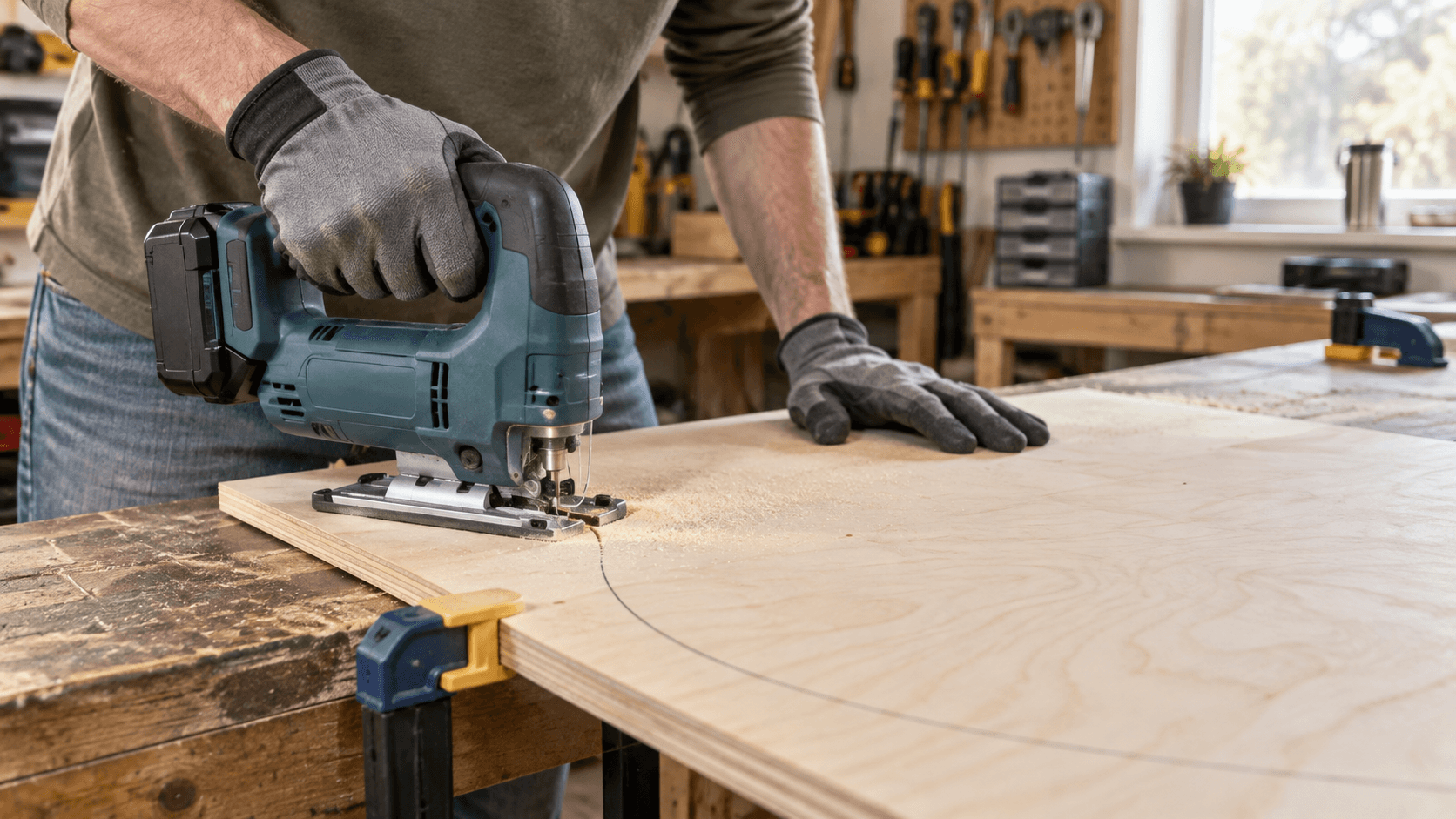
5 Best Cordless Jigsaws for Homeowners in 2026
Compare five current cordless jigsaws by handle style, speed control, cutting capacity, battery platform, and homeowner use case.
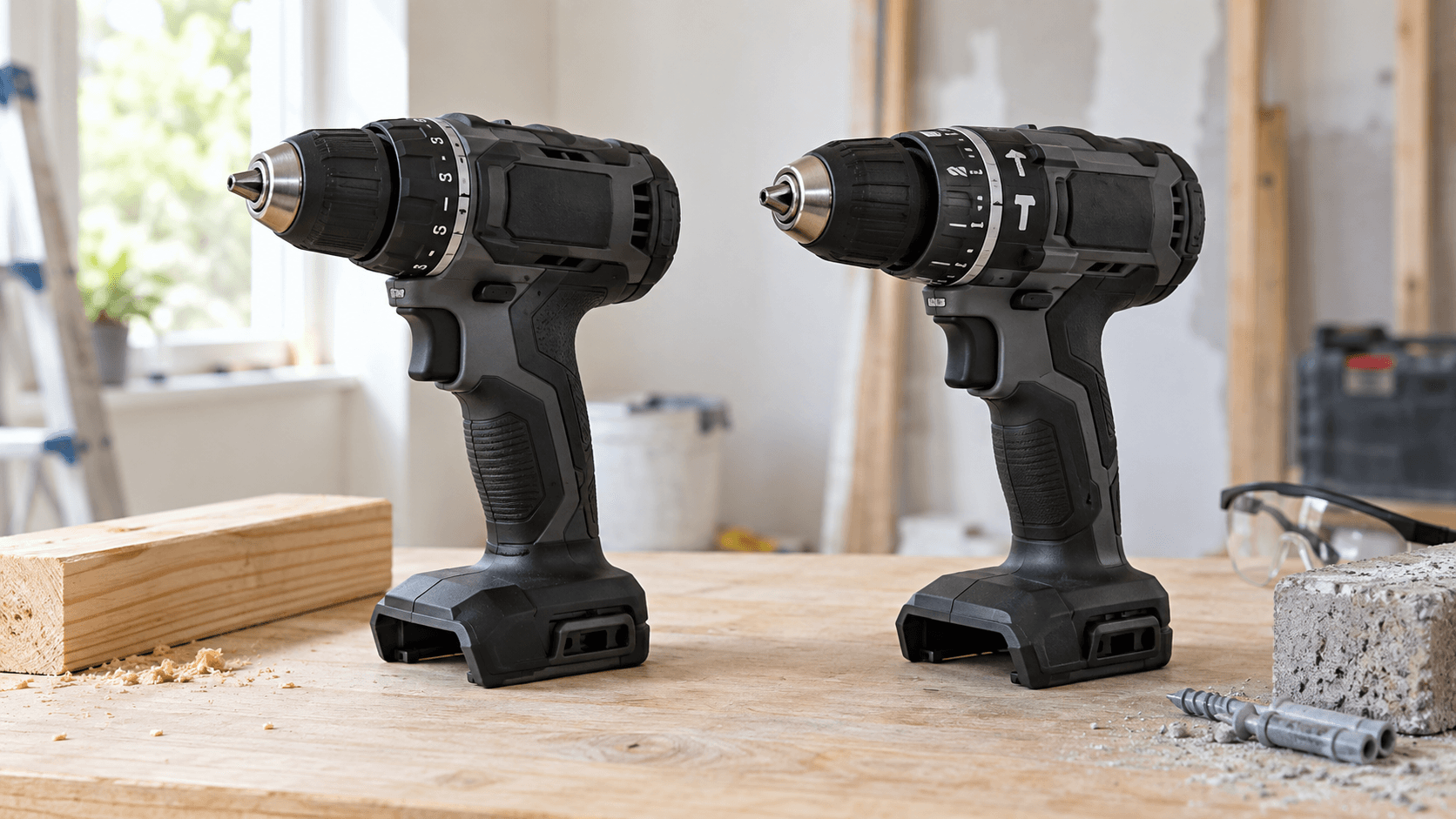
DeWalt DCD800 vs DCD805: Which Drill Should You Buy in 2026?
Compare the DeWalt DCD800 drill-driver and DCD805 hammer drill by modes, size, speed, capacity, package contents, and homeowner use.
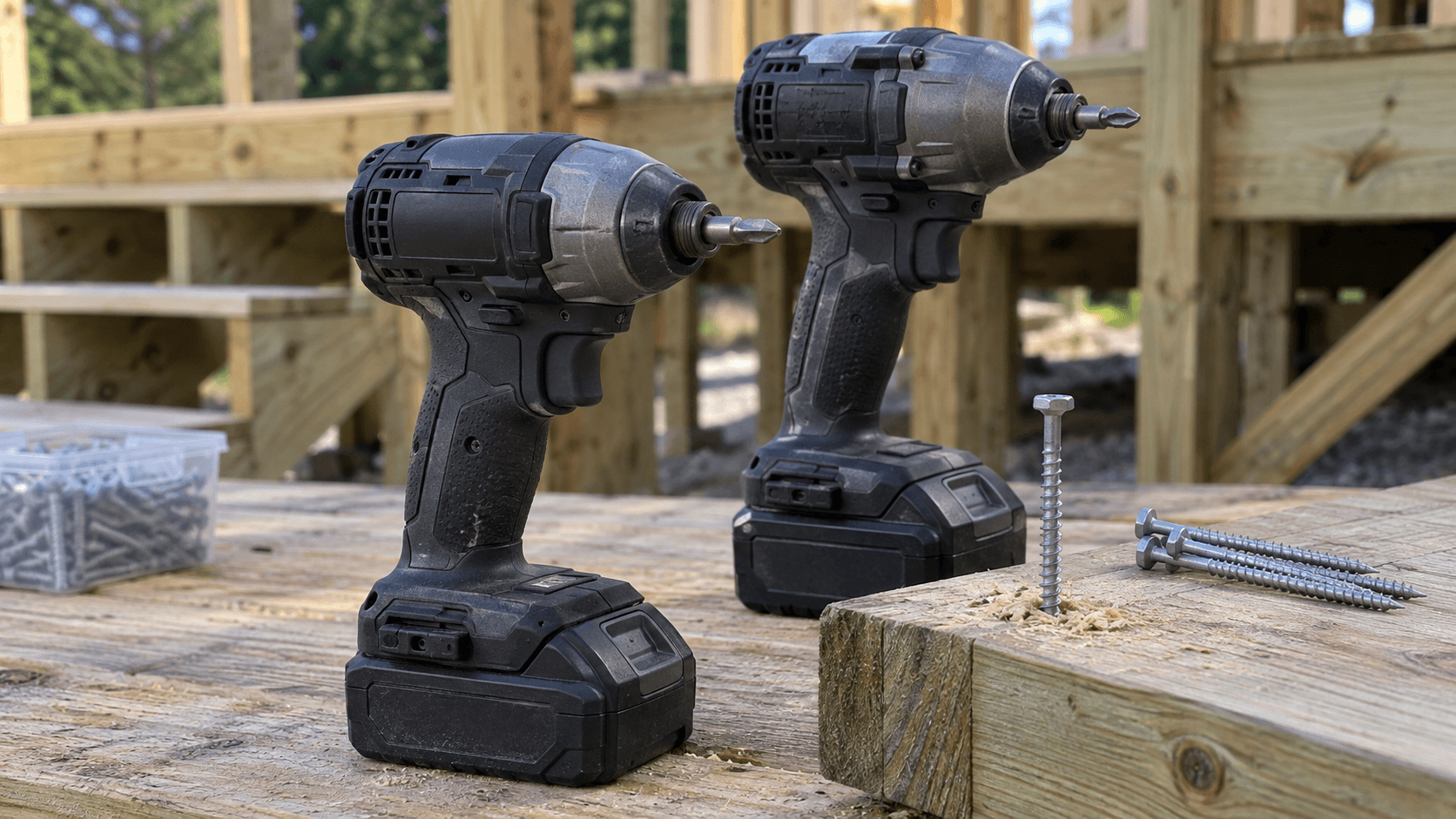
DeWalt DCF850 vs DCF860: Compact or High-Torque Impact Driver?
Compare DeWalt's compact DCF850 and high-torque DCF860 impact drivers by size, speed, torque, controls, lighting, and homeowner use.
Makita XFD14 vs XPH14: Which 18V LXT Drill Should You Buy?
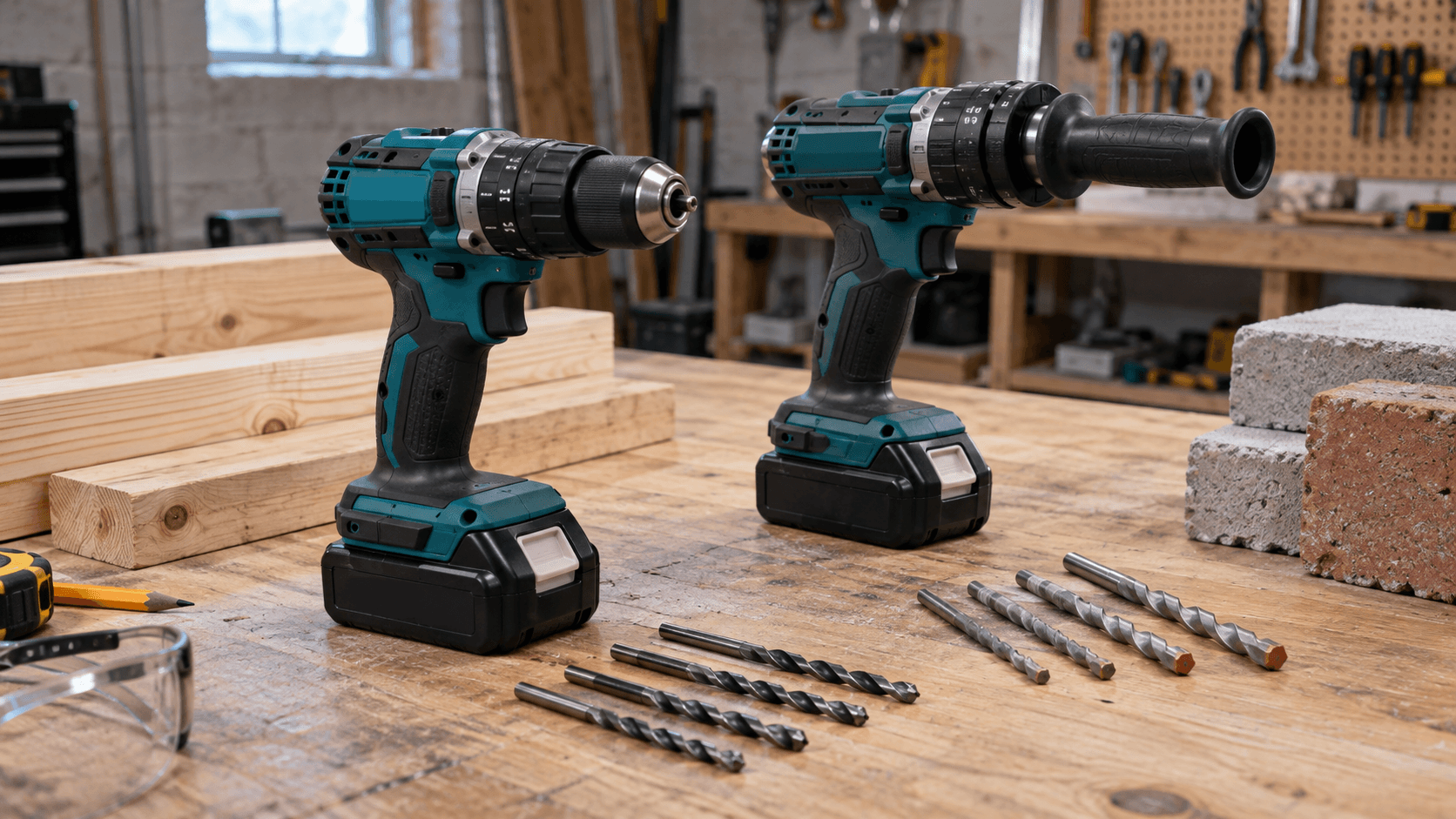
Compare Makita's XFD14 drill-driver and XPH14 hammer drill by torque, speed, weight, masonry capability, and package configuration.
Milwaukee 2903 vs 2904: Drill or Hammer Drill in 2026?
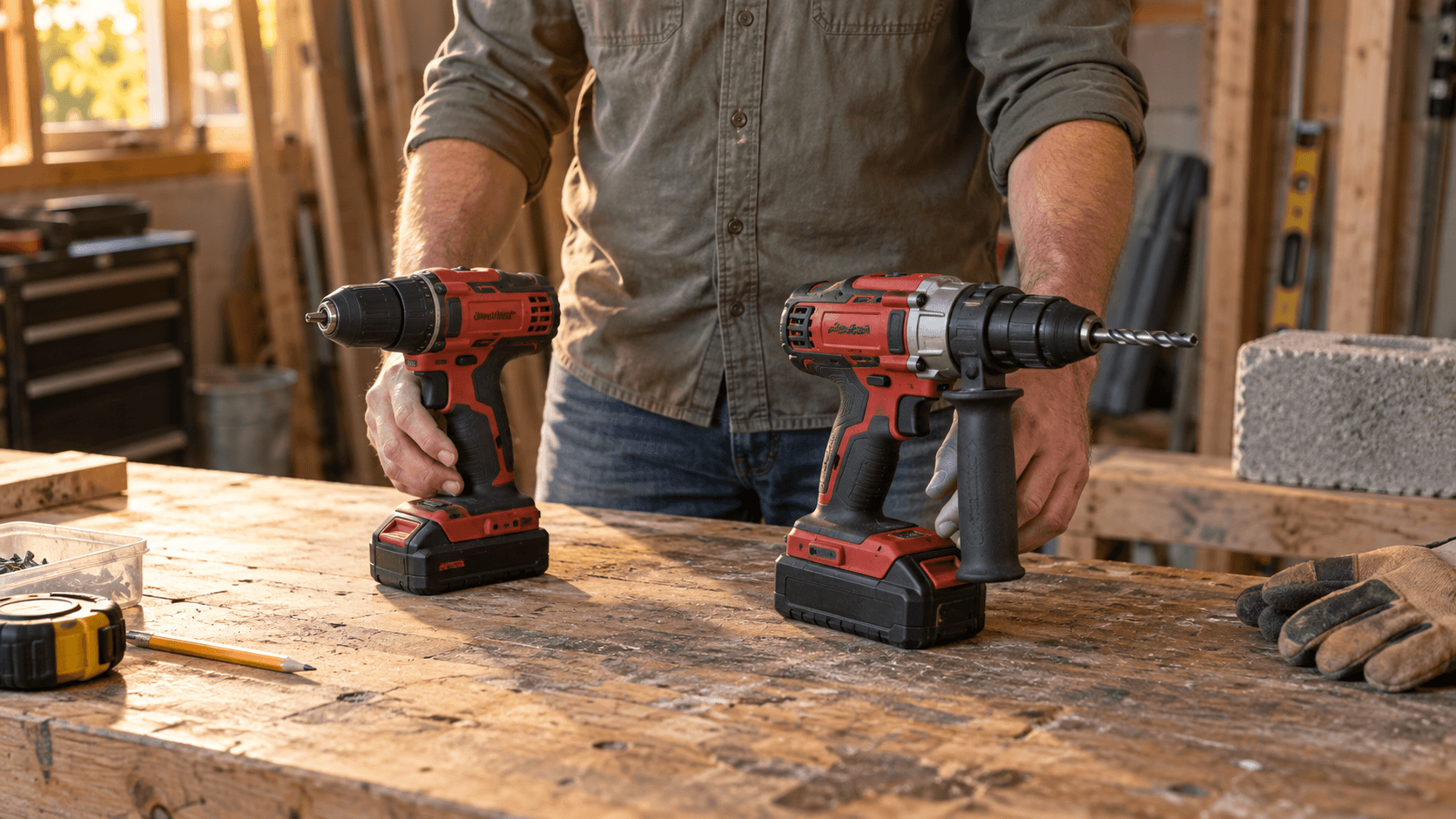
Compare the Milwaukee M18 Fuel 2903 drill-driver and 2904 hammer drill by shared performance, hammer mode, controls, and homeowner use.
Cordless vs Corded Tools: Choose the Right Power Source
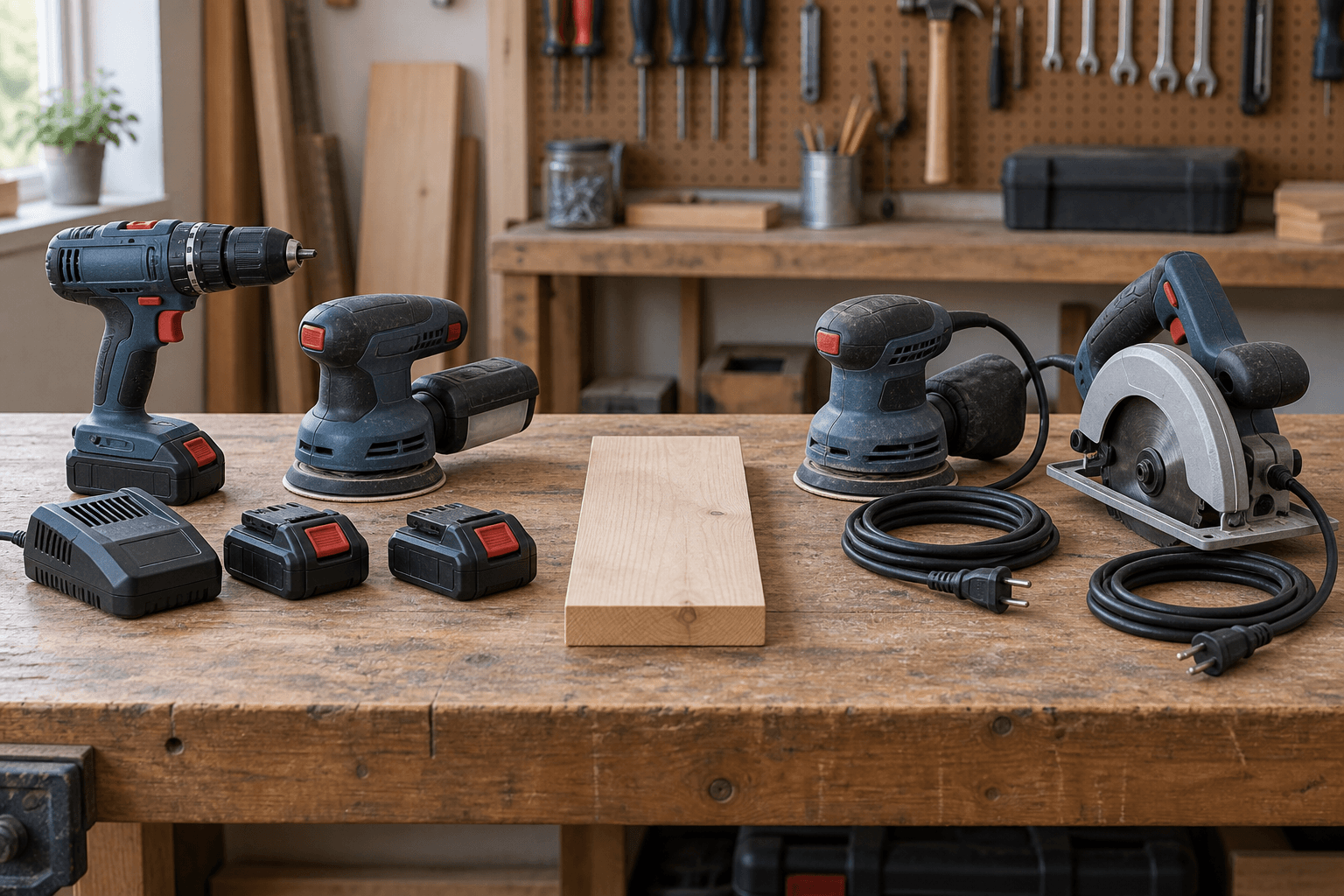
Compare cordless and corded power tools by mobility, duty cycle, complete-system cost, workspace, and tool category—without blanket performance claims.