
DeWalt DCD771C2 Review: Is It Still Worth Buying in 2026?
A fact-checked DeWalt DCD771C2 review covering its 300 UWO output, two-speed gearbox, kit contents, limitations, and newer DCD793 alternative.
Affiliate disclosure: We may earn a commission on purchases made through links in this article, at no extra cost to you. Learn more.
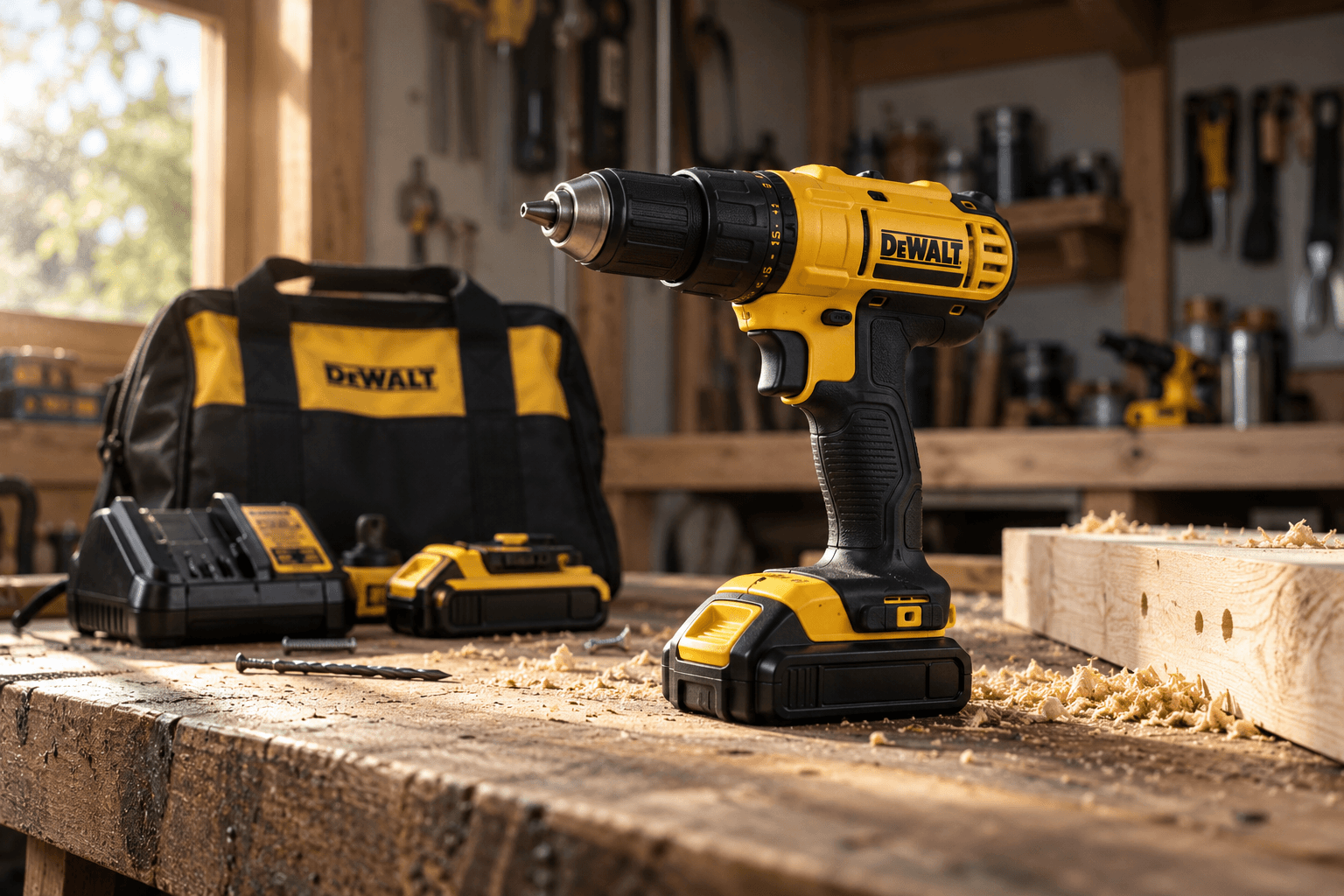
The DeWalt DCD771C2 is an older compact 20V Max drill/driver kit that remains listed on DeWalt's US website. Its appeal is easy to understand: the manufacturer-defined package includes the drill, two compact batteries, a charger, and a bag, so a first-time buyer receives the essentials in one box.
That does not make it the default DeWalt drill in 2026. DeWalt now offers shorter, explicitly brushless models with higher published output. The decision therefore depends on the exact DCD771C2 package available to you, the work you expect it to do, and how it compares with a current kit—not on an old sale price or an invented performance score.
This review is based on DeWalt's current product pages and instruction manual. It does not claim hands-on testing, measured runtime, or long-term durability data that this site has not collected.
Short answer: should you buy the DCD771C2?
Consider it if you are buying your first DeWalt cordless drill, need a complete two-battery kit, and expect routine household work: pilot holes, furniture assembly, shelving, cabinet hardware, light repairs, and ordinary screwdriving.
Compare before buying if a DCD793D1 kit is available in a similar configuration. DeWalt rates the DCD793 at 404 UWO and says its tool head is more than two inches shorter than the DCD771. It is also explicitly brushless. Those are meaningful improvements for frequent use and work in cabinets or other confined spaces.
Skip the DCD771C2 if you regularly drill masonry, use large hole saws or self-feed bits, or need a drill for sustained professional work. It has no hammer mode, and DeWalt's own documentation positions it as a compact drill/driver rather than a heavy-duty drilling system.
DCD771C2 specifications and kit contents
| Item | Manufacturer-published detail | |---|---| | Tool type | Compact 1/2-inch drill/driver | | Battery platform | DeWalt 20V Max; 18V nominal according to the manual | | Published output | 300 UWO (unit watts out) | | Speed ranges | 0–450 and 0–1,500 RPM | | Chuck | 1/2-inch single-sleeve ratcheting chuck | | Modes | Drilling and clutch-controlled screwdriving; no hammer mode | | Kit contents | DCD771 drill, two compact lithium-ion batteries, compact charger, contractor bag |
The table deliberately omits several numbers repeated by retailer listings. DeWalt's current US page does not provide a clear working-weight specification for the exact kit, and its battery wording is not consistent enough to use a capacity claim confidently. The safe approach is to verify the battery model numbers printed on the listing or package before purchase.
300 UWO is not 300 in-lbs of torque
DeWalt publishes 300 unit watts out for the DCD771. UWO is an output measure; it is not a torque rating in inch-pounds. Changing the unit to “300 in-lbs” creates a specification the manufacturer did not publish.
This also means the DCD771 cannot be responsibly ranked against a drill advertised with an inch-pound torque figure using those numbers alone. Gear ratio, speed under load, battery, bit, material, and test method all affect real work. Treat 300 UWO as a model-specific manufacturer figure, then use the drill's intended applications and configuration to decide whether it fits.
What the two-speed gearbox changes
The selector provides a lower 0–450 RPM range and a higher 0–1,500 RPM range. Low gear favors slower, more controlled fastening and higher-load drilling. High gear favors smaller holes and applications where speed matters more than maximum turning force.
The variable-speed trigger works within the selected range. The numbered clutch positions help limit fastening force so a screw is less likely to be driven too deeply. For drilling, the collar is moved to the drill symbol rather than a numbered clutch setting. Our cordless-drill buying guide explains these controls in more detail.
Chuck and work light
DeWalt describes the chuck as a 1/2-inch single-sleeve ratcheting chuck. It accepts common round- and hex-shank drill bits up to the chuck's stated capacity. “All-metal chuck” appears in some secondary descriptions but is not the wording on the current official DCD771C2 page, so we do not repeat that claim.
The drill also has a trigger-activated work light. It can help illuminate a fastener or drilling mark, but it is not a substitute for lighting the full work area.
What jobs suit the DCD771C2?
The DCD771C2 makes the most sense as a general household drill. Reasonable applications include:
- drilling pilot holes in common lumber;
- assembling furniture and shop storage;
- installing cabinet pulls, hinges, shelves, and curtain hardware;
- driving ordinary screws with the clutch set appropriately;
- drilling wood, metal, or plastic within the bit and material guidance in the manual.
These are use-case judgments based on the tool type and documented controls, not claims that we completed a particular project with this unit. Bit selection, hole diameter, material, battery condition, and technique determine whether a specific job is comfortable and safe.
The adjustable three-jaw chuck makes a drill/driver more versatile than an impact driver as a first power tool. If repeated long fasteners are the main job, however, an impact driver can complement it. The distinction is covered in our impact driver vs drill guide.
Where the DCD771C2 reaches its limits
It is not a hammer drill
The DCD771 has conventional drilling and screwdriving functions but no hammer mechanism. Do not interpret the 20V Max label as evidence that it is intended for brick or concrete. For recurring masonry holes, compare a hammer drill; for substantial concrete drilling, a rotary hammer is a separate and more suitable class.
Large accessories increase reaction force
Large hole saws, spade bits, and other high-load accessories can bind. If a bit stalls, release the trigger rather than repeatedly forcing it. Secure the workpiece, keep a balanced stance, use the correct speed range, and follow the manual's bit and safety instructions. A compact drill without a side handle or electronic anti-rotation feature should not be chosen for jobs where bind-up control is a primary concern.
Compact batteries prioritize size over runtime
The package includes two compact batteries, which lets one pack charge while the other is available. That is a useful kit advantage, but battery count does not establish runtime. Capacity, age, temperature, material, accessory, and load all matter.
We therefore cannot support claims such as “20 minutes of runtime” or “charges in 40 minutes” without testing the exact battery and charger combination under a defined protocol. Nor is there a basis for telling every buyer to replace the included packs immediately. Use the kit first; add a compatible higher-capacity pack only if your actual workload justifies the extra runtime and weight.
Battery compatibility: what 20V Max means
DeWalt explains in the instruction manual that a 20V Max battery measures 20 volts at maximum initial charge and 18 volts nominal under load. The label does not put the tool in a fundamentally different voltage class from products marketed as 18V by other brands.
The manual's compatibility table lists multiple DeWalt 20V Max battery packs and chargers for the DCD771. That is more precise than saying “every DeWalt battery fits every DeWalt tool,” which ignores different voltage families, chargers, and product generations. Before buying a loose pack or replacement charger, match its model number to DeWalt's current documentation.
If this will be your first cordless platform, look beyond the drill. Check whether DeWalt's saws, sanders, outdoor tools, and other products match what you may buy later. If you already own usable batteries from another brand, a complete DCD771C2 kit opens a second ecosystem and may be less economical than a bare drill on your existing platform.
DCD771C2 vs DCD793D1
The DCD793 is the most relevant current DeWalt alternative because it is another compact 20V Max 1/2-inch drill/driver and is available as a kit.
| Feature | DCD771C2 | DCD793D1 family | |---|---|---| | Motor description | Not used as a buying claim here because current DCD771 documentation is inconsistent | Explicitly brushless | | Published output | 300 UWO | 404 UWO | | Maximum published speed | 1,500 RPM | 1,650 RPM | | Chuck | 1/2-inch ratcheting | 1/2-inch ratcheting | | Tool-head comparison | Baseline | DeWalt says more than 2 inches shorter than DCD771 | | Package | Two compact batteries, charger, bag | Contents depend on exact DCD793 suffix |
DeWalt also claims up to 16% more power for the DCD793 than the DCD771 when both are paired with a DCB203 battery. Because that comparison specifies a battery and manufacturer test basis, it should not be generalized to every kit or pack.
The choice is not simply “newer always wins.” The DCD771C2's two-battery package may be useful to a first-time owner, while an exact DCD793 offer may have a different battery count or capacity. Compare like with like: drill model, battery model and quantity, charger, seller, condition, and warranty eligibility.
Pros
- Two-battery starter package
- Useful speed range for ordinary household work
- Adjustable clutch and 1/2-inch chuck
- Current official product and manual documentation
Cons
- No hammer mode
- Older and longer than the DCD793
- UWO is often mislabeled as torque by secondary listings
- Exact battery specifications must be checked on the offer
How to evaluate a DCD771C2 listing
The model number alone is not enough when retailer and marketplace offers mix new, used, refurbished, and incomplete packages. Before paying, verify:
- The suffix.
DCD771C2identifies the kit discussed here. A DCD771 tool sold alone is not the same package. - Everything in the box. Confirm two batteries, their printed model numbers and capacities, the charger model, and the contractor bag.
- Condition and seller. A low listing price can reflect an open-box, used, refurbished, or split kit rather than an equivalent new package.
- Warranty eligibility. Check the seller, proof-of-purchase requirements, and current DeWalt terms instead of assuming every marketplace offer has identical coverage.
- The current alternative. Compare the complete DCD793 kit configuration, not a DCD771 kit against a DCD793 bare tool.
Exact street prices are intentionally absent from this review. They change frequently and can mislead when two listings include different batteries or accessories. Check each destination for the exact model, package contents, seller, availability, and warranty terms.
Final verdict
The DeWalt DCD771C2 is still a defensible homeowner starter kit, but it should be bought for the right reason. Its strengths are the complete two-battery package, two-speed transmission, adjustable clutch, 1/2-inch ratcheting chuck, and access to the 20V Max platform. It suits ordinary drilling and fastening better than masonry or sustained high-load work.
Its age now matters. The DCD793 offers an explicitly brushless design, a shorter head, a faster top speed, and higher manufacturer-published output. For a buyer who expects regular use or often works in tight spaces, that is the more compelling benchmark. The DCD771C2 becomes the better fit only when its verified kit contents and overall offer outweigh those improvements.
Before choosing either one, read our comparison of the best cordless drills for homeowners and decide whether you need a basic drill/driver, hammer mode, or a different battery platform. Do not buy the DCD771C2 because a retailer converted UWO into torque, quoted an old price, or promised runtime without a test method.
Sources and methodology
This article uses manufacturer documentation for model status, specifications, kit contents, controls, compatibility, and the DCD793 comparison. Recommendations are editorial judgments about which buyer and workload those documented features suit. No retailer reviews, undisclosed product testing, or current-price snapshots were used.
Frequently Asked Questions
Is the DeWalt DCD771C2 brushless?
Does 300 UWO mean 300 in-lbs of torque?
What comes in the DCD771C2 kit?
Can the DCD771C2 drill into concrete?
Will other DeWalt batteries fit the DCD771?
About the author
Jane DIY
— Senior Reviews EditorJane DIY is the Senior Reviews Editor for DIY Tool Guide. Her byline identifies articles she reviews for clarity, sourcing, and practical usefulness.
More from Tool Reviews & Comparisons
5 Best Cordless Jigsaws for Homeowners in 2026
Compare five current cordless jigsaws by handle style, speed control, cutting capacity, battery platform, and homeowner use case.
DeWalt DCD800 vs DCD805: Which Drill Should You Buy in 2026?
Compare the DeWalt DCD800 drill-driver and DCD805 hammer drill by modes, size, speed, capacity, package contents, and homeowner use.
DeWalt DCF850 vs DCF860: Compact or High-Torque Impact Driver?
Compare DeWalt's compact DCF850 and high-torque DCF860 impact drivers by size, speed, torque, controls, lighting, and homeowner use.
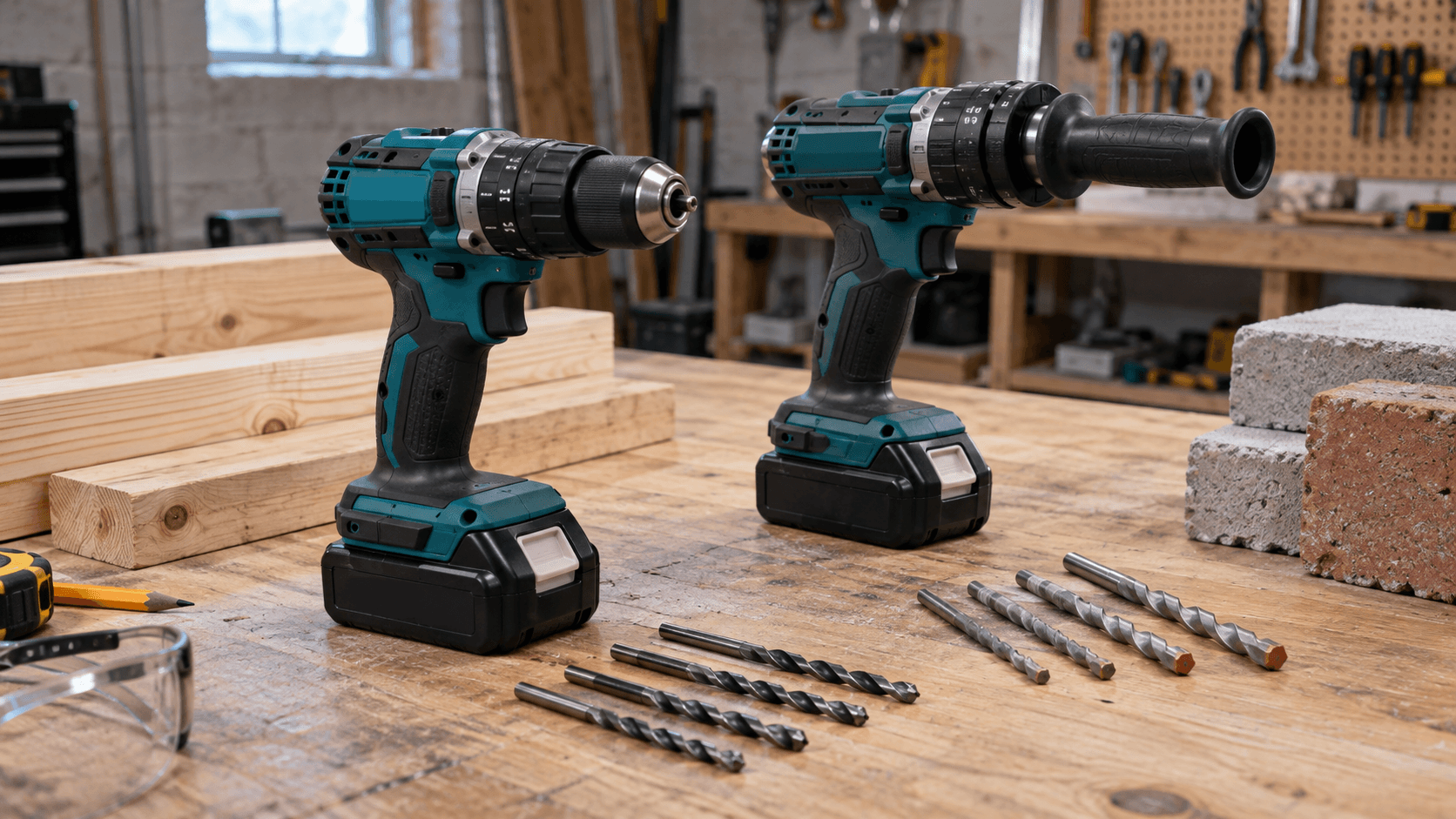
Makita XFD14 vs XPH14: Which 18V LXT Drill Should You Buy?
Compare Makita's XFD14 drill-driver and XPH14 hammer drill by torque, speed, weight, masonry capability, and package configuration.
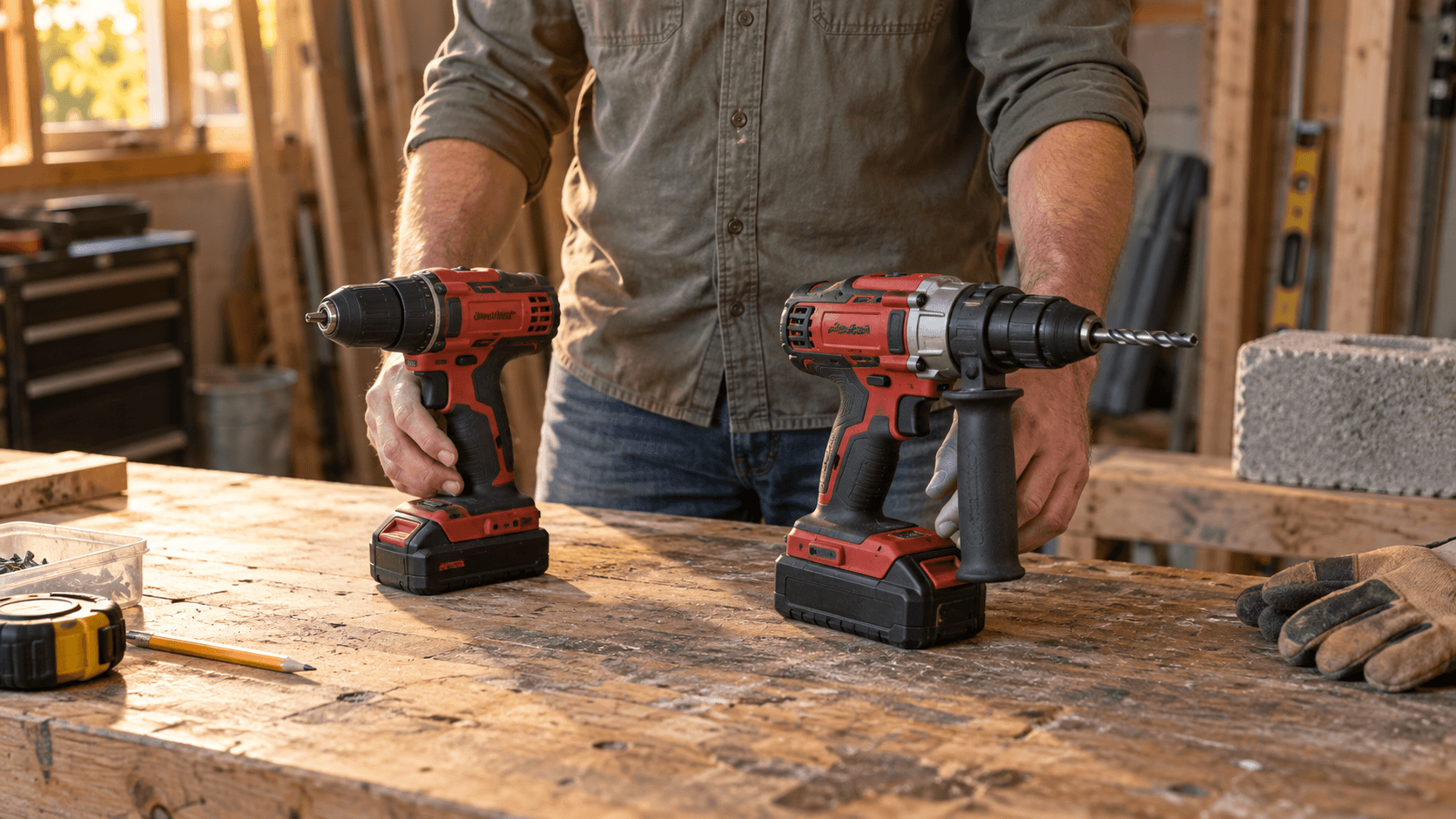
Milwaukee 2903 vs 2904: Drill or Hammer Drill in 2026?
Compare the Milwaukee M18 Fuel 2903 drill-driver and 2904 hammer drill by shared performance, hammer mode, controls, and homeowner use.
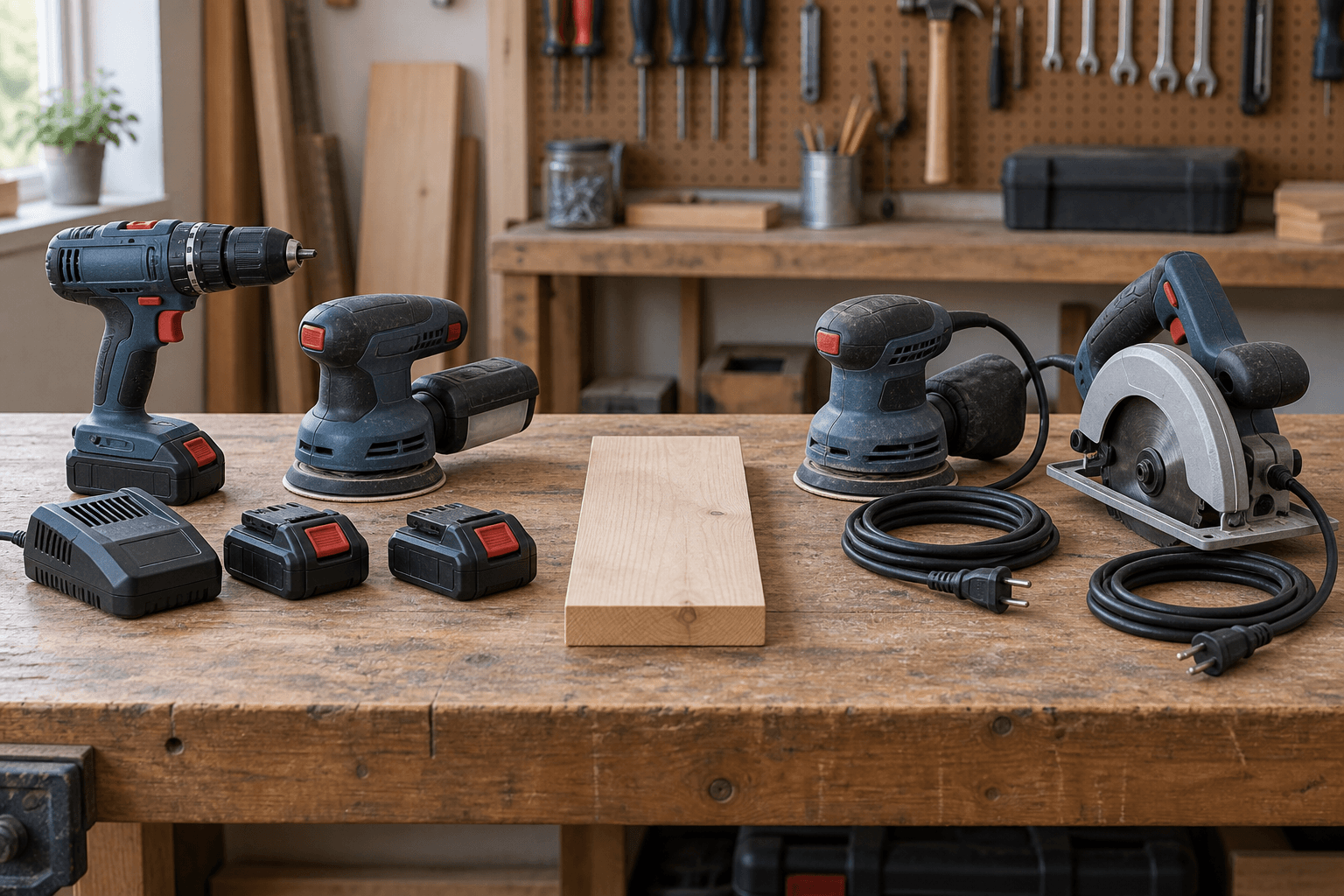
Cordless vs Corded Tools: Choose the Right Power Source
Compare cordless and corded power tools by mobility, duty cycle, complete-system cost, workspace, and tool category—without blanket performance claims.